
What Is the Crosby Straightpoint Radiolink Plus (RLP) Load Cell — and When Should You Use It?
If you work in lifting, rigging, load testing or pulling applications, you’ve probably come across situations where knowing the actual load matters just as much as moving it. That is where a wireless load cell becomes useful — not only for measurement, but also for improving visibility, planning and safety during the job.
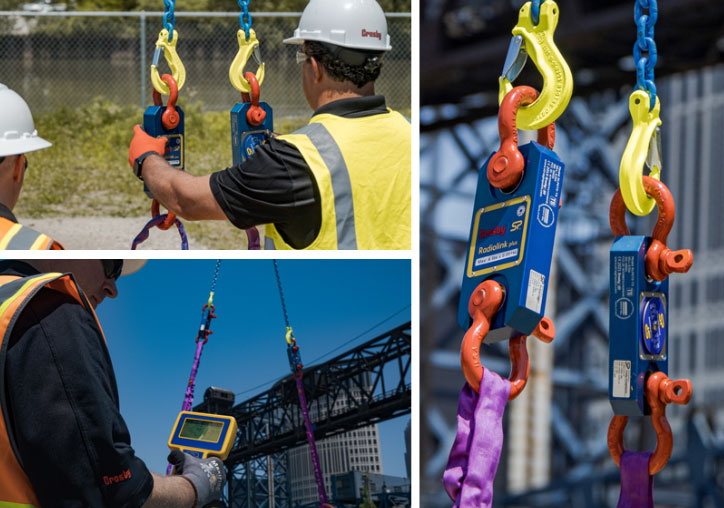
One of the best-known products in this category is the Crosby Straightpoint Radiolink Plus (RLP), a wireless tension load cell designed for weighing and dynamic load monitoring. It is commonly used in lifting, pulling and load testing applications where operators need clear load information without being close to the suspended or tensioned load.
What is the Radiolink Plus (RLP)?
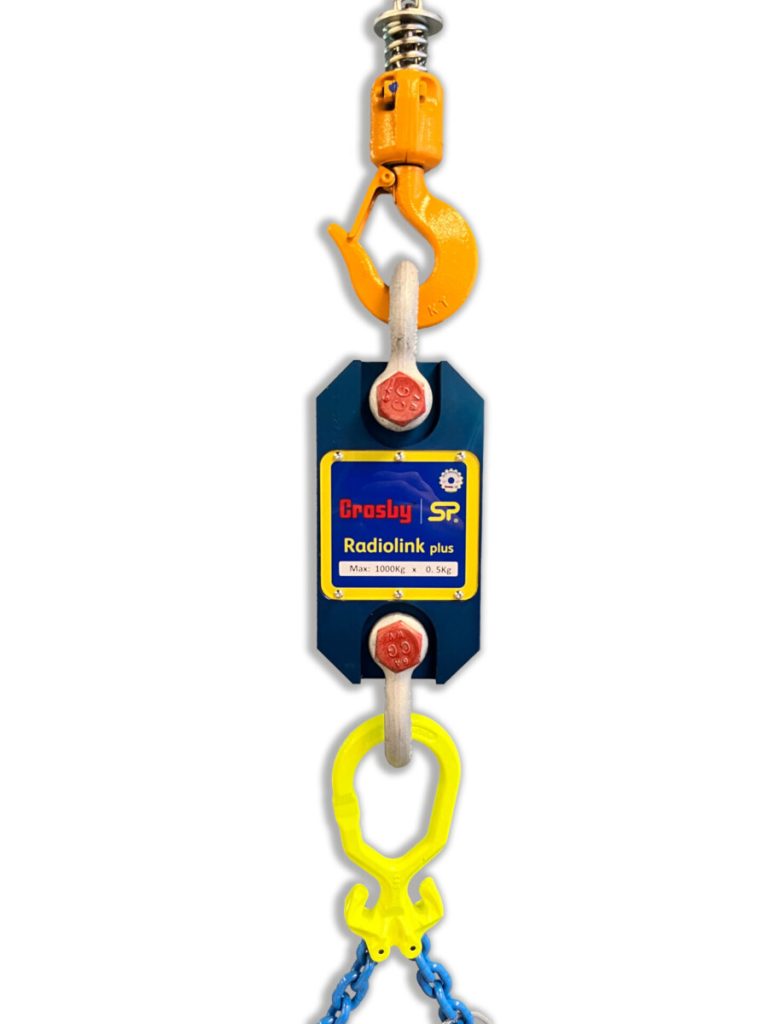
The Radiolink Plus (RLP) is a wireless load-monitoring device used in lifting and pulling applications to measure suspended loads and let operators view load data from a safer distance. Designed to work with Crosby standard shackles, it is available in long-range wireless (TS), Bluetooth (BLE), and ATEX/IECEx versions for hazardous environments.
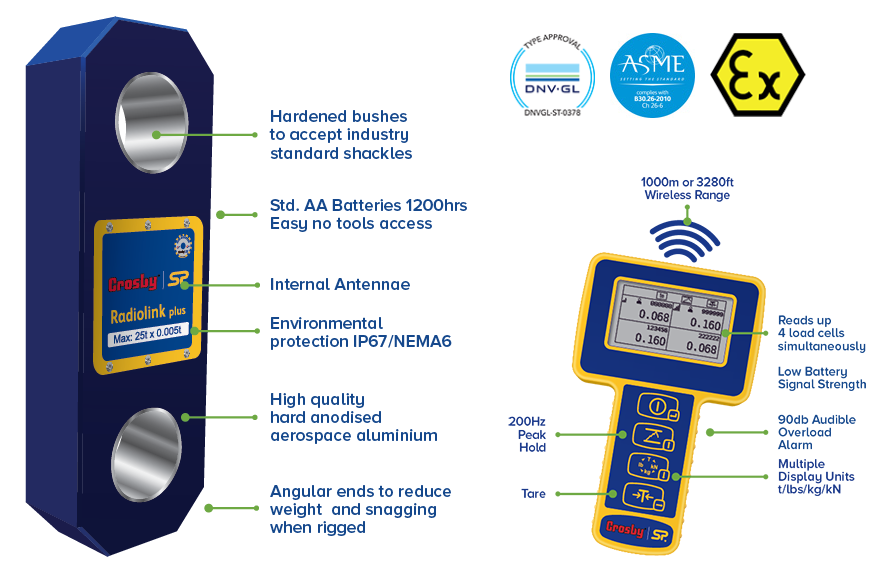
Put simply, the RLP helps users monitor load without needing to stand beside the rigging and read a display at the point of lift. Depending on the version, data can be viewed on a handheld display, in software, or through a mobile app. Long-range wireless models can be used up to 1000 m away, and up to four load cells can be paired to one remote at a time for added flexibility in the field.
Why wireless load monitoring matters
In many lifting and rigging tasks, assumptions about weight are only estimates. Real loads can shift because of rigging angles, centre of gravity, dynamic movement or unexpected resistance. A wireless load cell helps make that information visible in real time.
That visibility can be useful when you are:
- planning a lift and checking load share across rigging points
- monitoring a dynamic pull or tensioning task
- carrying out proof load tests or load verification
- working in environments where distance from the load improves operator safety
Rather than relying solely on calculations or assumptions, operators can use live load data to make better decisions during the task. Watch the Crosby Straightpoint Radiolink Plus in action for remote load monitoring during lifting.
Where the Radiolink Plus is commonly used
The RLP is often associated with lifting, pulling and load testing, but its use goes beyond standard crane work. Crosby’s own load monitoring materials highlight applications and industries including construction, heavy lift, logistics, marine, shipping, oil and gas, towage and salvage, utilities, testing and stage/event rigging.
That broad use makes sense, because the same core question appears in many different jobs:
“What load are we actually seeing right now?”
For example, the RLP can be useful in:
1. Lifting and rigging
When a lift involves a valuable asset, uneven geometry or multiple rigging points, live load feedback helps teams understand what is happening during the lift rather than after it.
2. Pulling and recovery
In pulling or recovery work, load can rise quickly as friction, alignment or resistance changes. A wireless tension load cell helps operators monitor those changes from a safer distance.
3. Load testing
For proof testing or monitored test events, the ability to capture and review load data is often just as important as seeing the live number. The RLP can be used with handheld displays and software options for remote viewing and data logging.
4. Difficult environments
The RLP is environmentally sealed to IP67 / NEMA6, and official product materials note that it is intended for use in harsh environments and demanding weather conditions
What makes the RLP practical on-site?
A lot of product pages list specifications, but from a user point of view, only a few features really change the day-to-day experience.
Remote monitoring
The long-range wireless version offers a system range of up to 1000m / 3280ft, while the Bluetooth option is intended for shorter-range monitoring via the HHP app on iOS and Android.
Built for real environments
The unit is made from aerospace-grade aluminium and uses a sealed enclosure to protect the electronics, with IP67 / NEMA6 environmental protection.
Long battery life
Official product information lists battery life at up to 1,200 hours continuous for the load cell in standard use, which is one of the reasons the RLP is often considered practical for field work and longer projects.
Suitable for dynamic measurement
The standard update rate is 3Hz, and the RLP can be configured for higher-speed applications up to 200Hz where dynamic force measurement is needed.
Accurate load visibility
The published accuracy is ±0.1% of full scale, which is important when users need confidence in the reading for monitoring or testing purposes.
Who is this load cell a good fit for?
The Radiolink Plus can be a good fit for teams that need more than a simple “lift and go” setup. It is especially relevant when jobs involve:
- critical lifts or monitored lifts
- remote visibility of load data
- test and inspection workflows
- harsh or outdoor environments
- hazardous area requirements, where ATEX/IECEx options are needed
For some users, the value is primarily about safety and distance. For others, it is about better data. In many cases, it is both.
Questions to ask before choosing a wireless load cell
If you are comparing load monitoring equipment, it helps to ask a few practical questions first:
1. What capacity do you need?
Start with the expected load, then consider the full application and setup.
2. Is the application static or dynamic?
Some jobs involve stable loads, while others involve force changes during movement or pulling.
3. How far away does the operator need to be?
Monitoring distance can be an important factor, especially on larger sites or in higher-risk areas.
4. Will the equipment be used outdoors or in harsh conditions?
Environmental protection matters when equipment is used in rain, dust, marine environments, or demanding industrial settings.
5. Do you need data logging or reporting?
For some users, a live reading is enough. For others, logging and reviewing load data later is just as important.
These questions can help narrow down whether the Radiolink Plus is the right fit, and which setup makes the most sense for the application.
Final thoughts
The Crosby Straightpoint Radiolink Plus (RLP) is a well-established option for teams looking to improve load monitoring in lifting, rigging, pulling, and testing applications. Its value comes from helping users see load more clearly during the task, rather than relying only on pre-lift calculations or assumptions.
For anyone researching a wireless load cell, tension load cell, or load monitoring solution for lifting, the RLP is worth understanding in the context of how it is used in real working environments. Factors such as application type, required capacity, monitoring distance, environmental conditions, and data requirements all play an important role in selecting the most suitable setup.
Readers who want a closer look at the product can explore the full specifications, monitoring options, and technical resources below.
Learn more about the Crosby Straightpoint Radiolink Plus (RLP)
If you need help assessing a particular lifting, rigging, or load monitoring application, our team can review your requirements and help identify a suitable solution.

